Bakht Singh
Bakht Singh Chabra (1903 – 2000) was an Indian Christian evangelist, author, and founder of the Hebron Fellowship. Regarded as a pioneer of India’s indigenous church movement, he emphasized New Testament–style worship contextualized to Indian culture and helped establish thousands of self-governing local assemblies across South Asia.
Key facts
Born: June 6, 1903 – Joiya village, Punjab (British India)
Died: September 17, 2000 – Hyderabad, India
Founded: Hebron Fellowship (1959)
Major works: God’s Dwelling Place (1973), Bethany (1971)
Legacy: 10,000 + churches planted worldwide
Early life and conversion
Born to Sikh parents Lal Jawahar Mal and Lakshmi Bai, Singh was initially devoted to Sikhism. While studying agricultural engineering in England and Canada, he encountered Christian families whose faith impressed him. In 1932 he was baptized in Vancouver after a profound spiritual experience that transformed his life .
Ministry in India
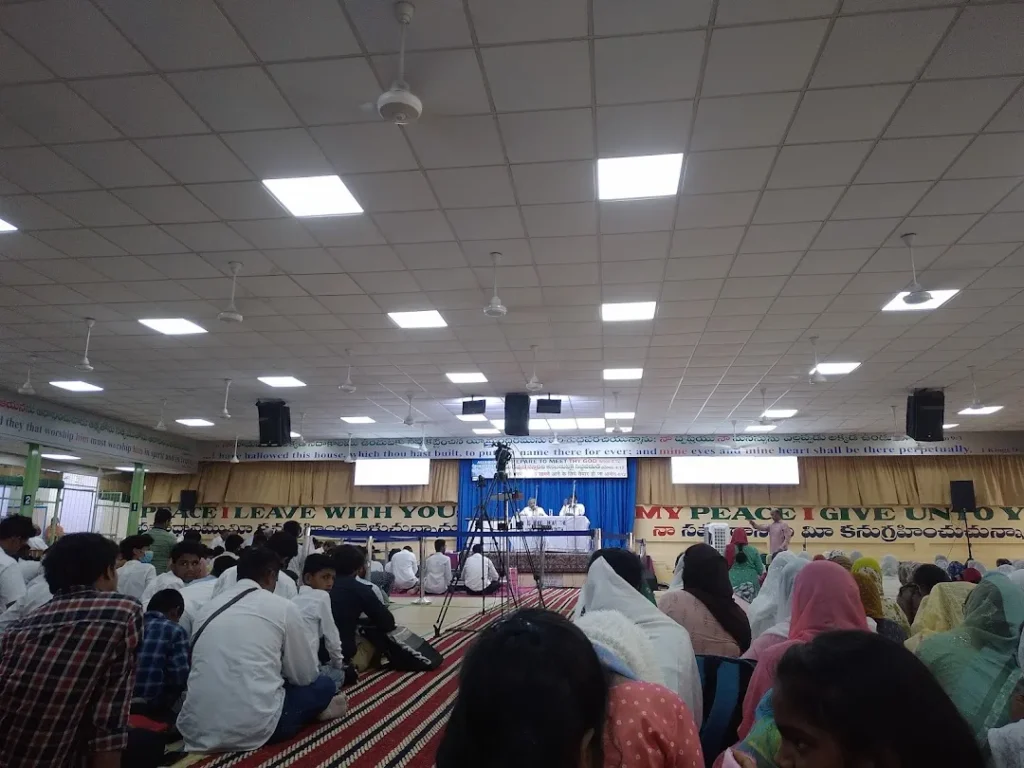
Returning to India in 1933, Singh preached openly despite family rejection. His revival meetings drew large crowds throughout colonial India. He advocated an independent Indian expression of Christianity free from denominational and colonial structures. The first assembly following this vision began in Madras (Chennai) in 1941 as Jehovah Shammah Church. He later moved his base to Hyderabad, founding the Hebron compound as a center for training and annual Holy Convocations .
Teachings and writings
Singh’s teaching focused on the unity of believers as the Body of Christ and on simple, scripture-based worship. His books—such as The Return of God’s Glory and The Joy of the Lord—capture his emphasis on holiness, fellowship, and Christ-centered living .
Legacy and recognition
At his death in 2000, hundreds of thousands attended his funeral in Hyderabad. Singh’s movement continues through Hebron Ministries and numerous assemblies worldwide. Christian leaders such as Ravi Zacharias and historian J. Edwin Orr praised him as one of India’s greatest Bible teachers